
Rooftop Urban Agrivoltaics – NISE Delhi
Agrivoltaics Net House
Location: Parbhani, India
- 250 kW
- 1 acre
- 4.0m
Project Overview
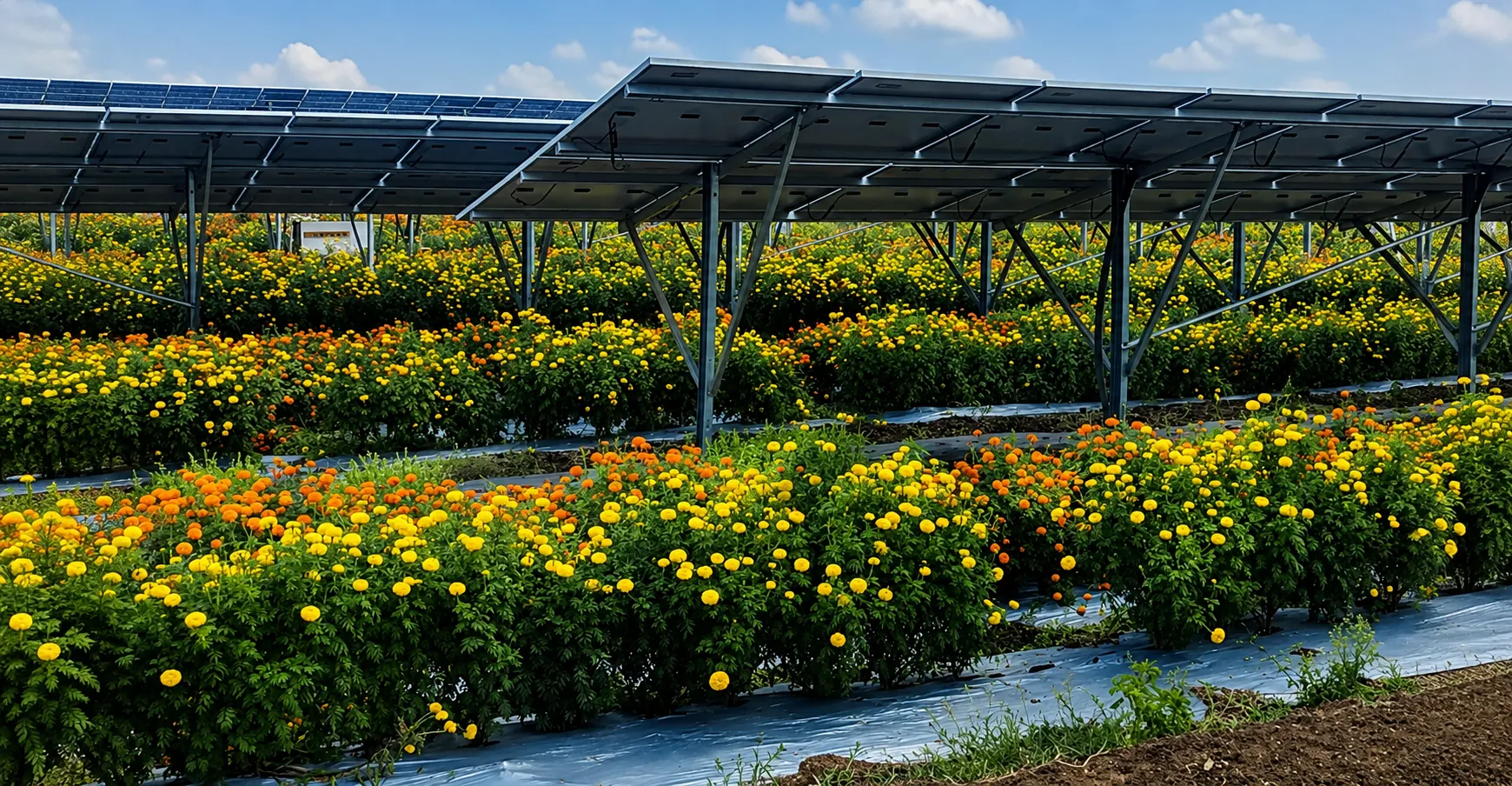
Located in Zari village, near Manwath in the Parbhani District of Maharashtra, India, this 1.5 MW Agrivoltaics (APV) facility spans 5 acres. Developed as a specialized research and production site within a larger 50MW ReNew Power solar installation, the project combines high-efficiency clean energy generation with optimized agricultural production.
Project Objectives
- Demonstrate dual-land use by integrating high-value crop cultivation with solar energy generation.
- Build a climate-resilient microclimate suited for semi-arid environmental conditions.
- Validate SunSeed’s proprietary wire-rope mounting technology to lower capital expenditures.
- Benchmark crop performance, light transmission, and energy yield across four distinct structural setups against a control plot.
What We Delivered
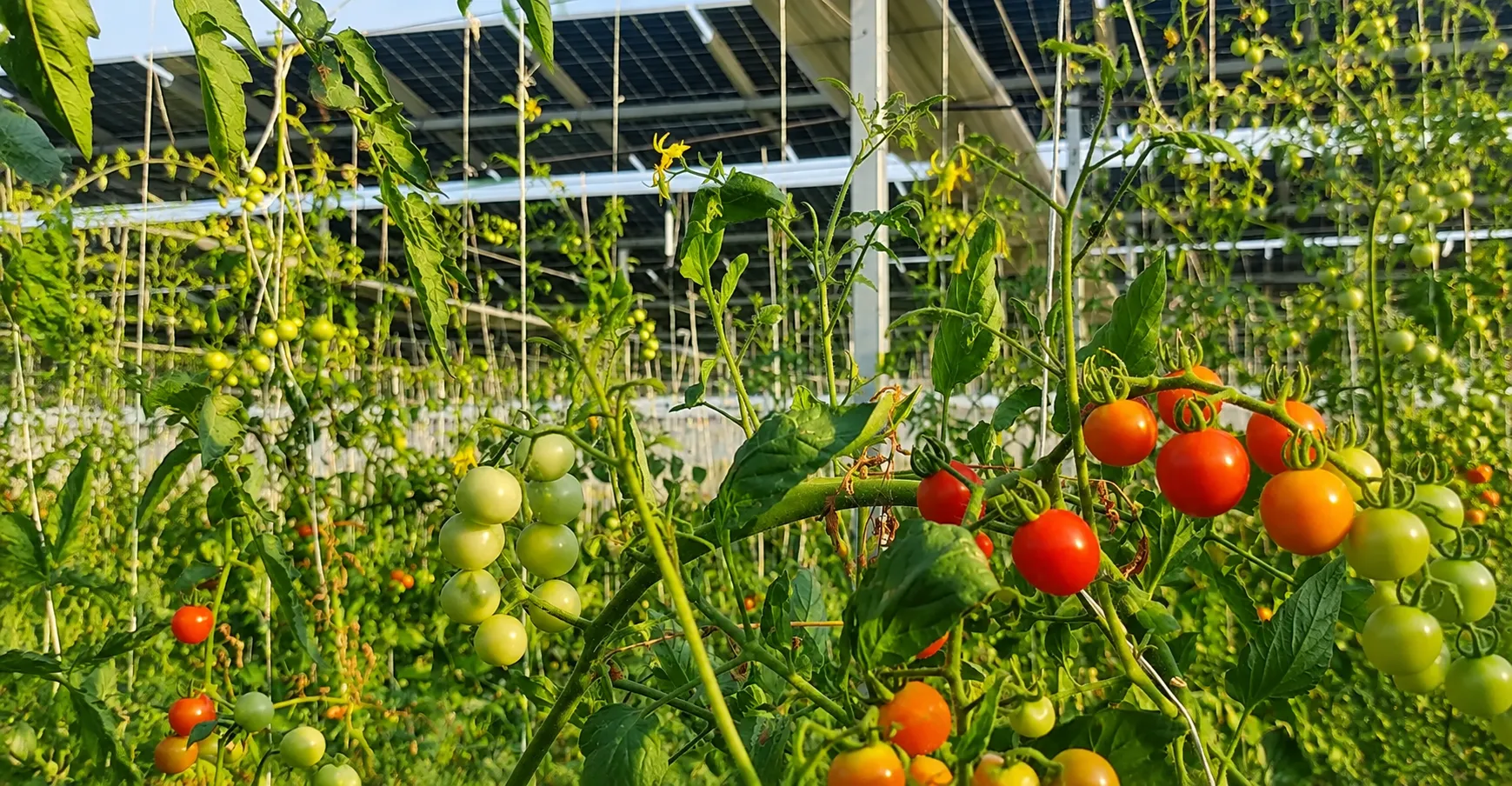
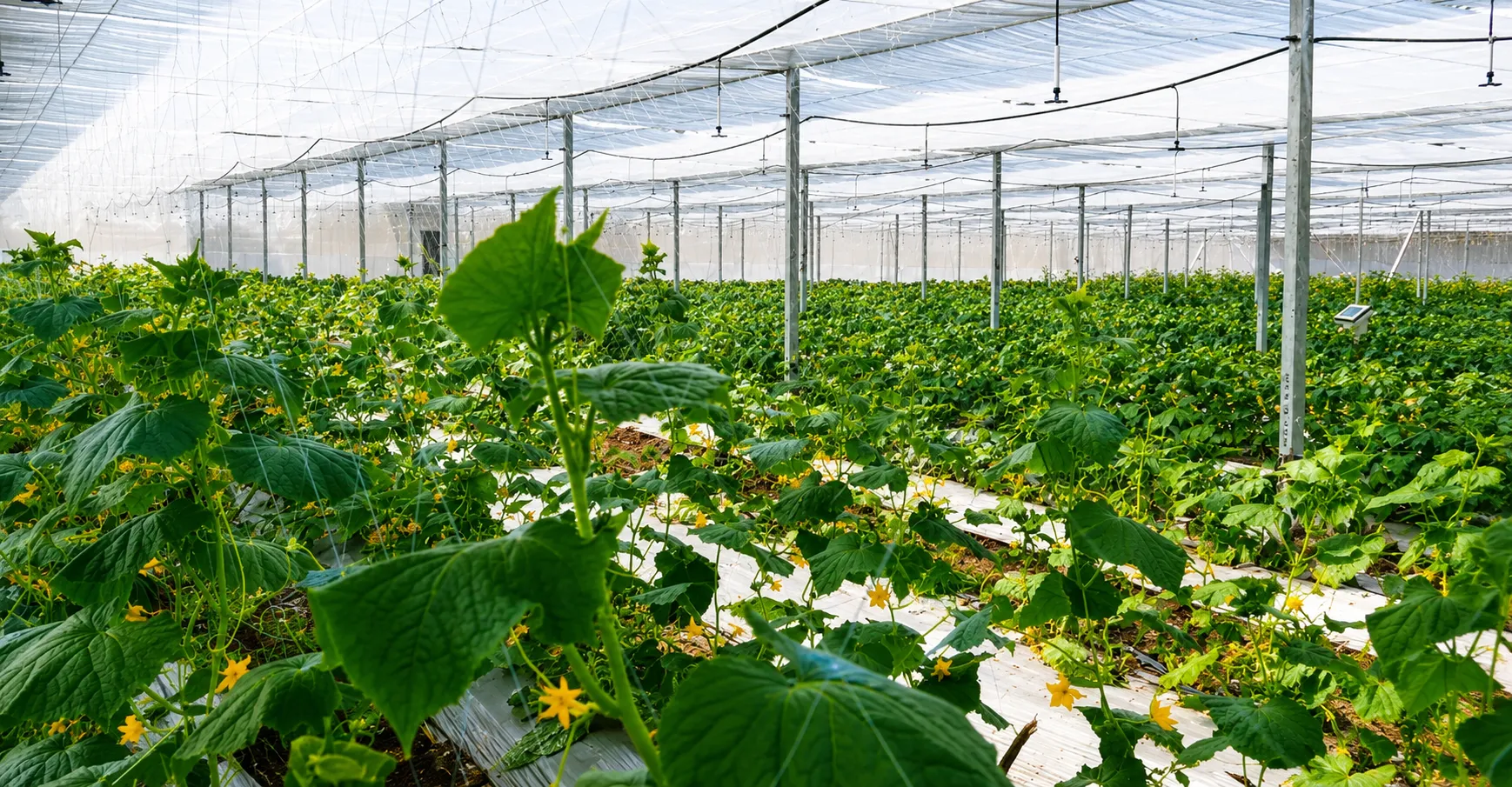
- 3.75m Flagship Net House: Engineered using SunSeed’s proprietary wire-rope cable system with built-in shade nets and trellising for dual-use functionality.
- 3 Variable Ground Mount Setups: Evaluated across 1.75m Bifacial, 1.25m Bifacial, and 1.75m Monofacial configurations.
- PV-Free Control Area: Dedicated non-shaded plot to accurately measure baseline growth patterns and solar comparative yields.
- Climate Control Infrastructure: Active partial microclimate regulation featuring top/side protective netting and misting foggers.
- Turnkey Timeline Execution: Structural erection completed in December 2022, followed by shade nets, irrigation, borewell, and site setup in January 2023, initiating the first cropping cycle in February 2023.
Key Results & Benefits
Metric | Value & Impact |
Panel Elevation & GCR | 4.0 m clearance height with 40% Ground Coverage Ratio (GCR) |
Project Economics | Modest ~ 25% additional capex yielding a 15–16% Expected Equity IRR 1–2% above conventional solar) |
Crop Productivity | Target crop yields of 100—125 % compared to standard open-field agriculture |
Structural Efficiency | Proprietary cable system significantly reduces foundation and column costs |
Primary Target Crops
Tomatoes, Bell Peppers, Cucumbers, Bananas, Turmeric, Ginger, Chrysanthemums, and Dutch Roses.
Fruits & Horticulture
Magai Paan (Betel leaf), Muskmelon, Watermelon, Microgreens, Cucumbers, Cherry Tomatoes
Flowers
Chrysanthemum, Dutch Rose, Tuberose, Marigold, Hibiscus
Under-Module Greens
Methi and Coriander planted directly beneath low-clearance non-elevated sections.
Our Impact
By modulating ambient light and buffering crops against heat stress via foggers, the installation delivers an economically viable blueprint for semi-arid agrivoltaics. The integration of proprietary cable structures de-risks capital expenditure, unlocking 1-2% higher IRR for project developers while safeguarding local food production.
Other Projects
Explore Our Other Projects
Explore SunSeed’s growing portfolio of agrivoltaics projects and see how our integrated approach adapts to different agricultural and energy requirements.
- 560 kW
- 1.5 acre
- 4.0m high
Location: Nashik, India
SunSeed’s single-axis tracker project in Nashik combines 4m elevated solar with smart tracking, supporting fruits and vines while enhancing resilience and delivering a 17–18% IRR through optimized design.
- 3.0 MW
- 10-acre